
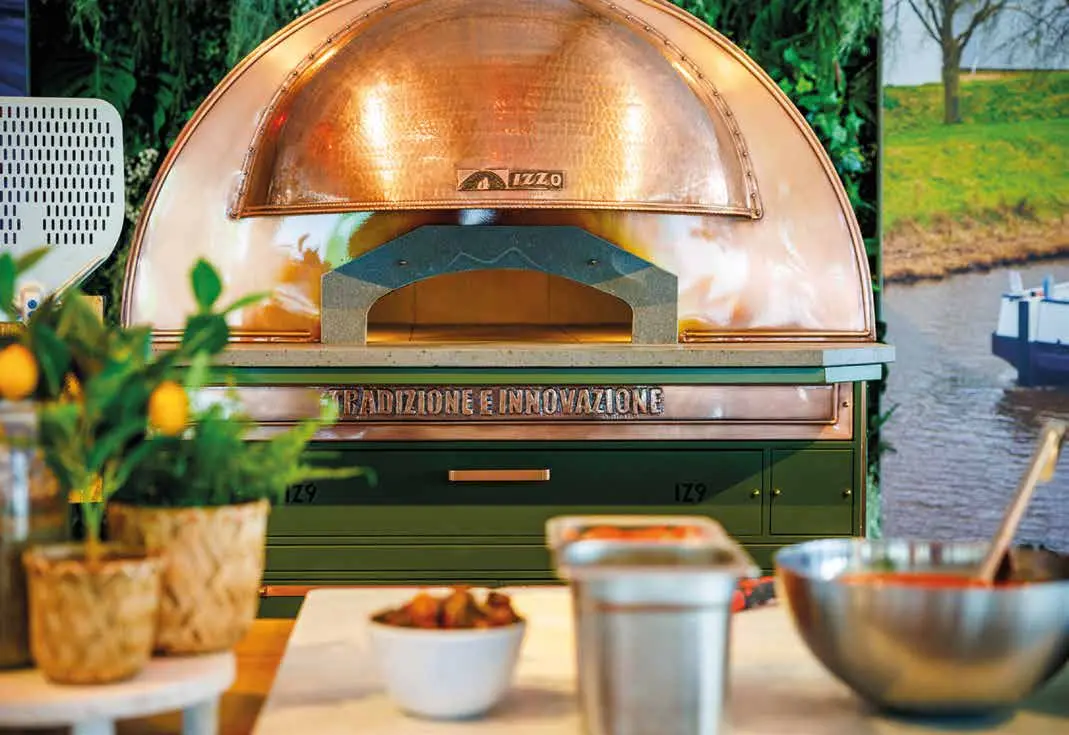
Venue preparation should begin before the oven is ordered. The most common delivery problems do not result from the appliance itself, but from insufficient electrical capacity, a transport route that is too narrow or too little space for safe operation.
1. Confirm the technical sheet for the exact version
The same product family may be available in several power-supply, control and equipment variants. The installation design should be based on the technical sheet assigned to the ordered model, not on data found in an archived catalogue or from another distributor.
2. Verify the power supply
An electrician should verify voltage, available connection power, cable cross-section, overcurrent protection and required residual-current protection. The exact termination point should also be defined so the cable does not interfere with the appliance or operator route.
3. Determine ventilation requirements
An electric oven does not burn gas or wood, but the workstation still emits heat, steam and product-related odours. The final ventilation solution should follow the venue design, applicable regulations and the installation designer's requirements.
4. Check the entire transport route
Measure not only the entrance door but also gates, lifts, corridors, turns, thresholds, stairs and passage heights. Consider the oven weight, unloading method, the possibility of using a trolley or pallet truck and the floor load capacity.
5. Plan the workspace
There must be enough space in front of the oven for safe opening, loading, turning and collecting the product. Plan where peels will be stored, where dough will be handled, the operator route and service access to the appliance.
6. Prepare for acceptance and commissioning
Before delivery, confirm that the installations are ready, access to the venue is available, responsible persons on the investor's side are present and tests can be performed. The scope of connection and commissioning should be clearly defined in the order.
Checklist
- current technical sheet and appliance drawing,
- confirmed power supply and protective devices,
- agreed ventilation,
- measured transport route,
- verified floor load capacity,
- workspace and service access,
- agreed scope of delivery, installation and commissioning.
Conclusion
Early verification of installations and transport reduces the risk of costly changes just before the venue opens. Technical requirements should therefore be part of the oven-selection process, not the final step after purchase.